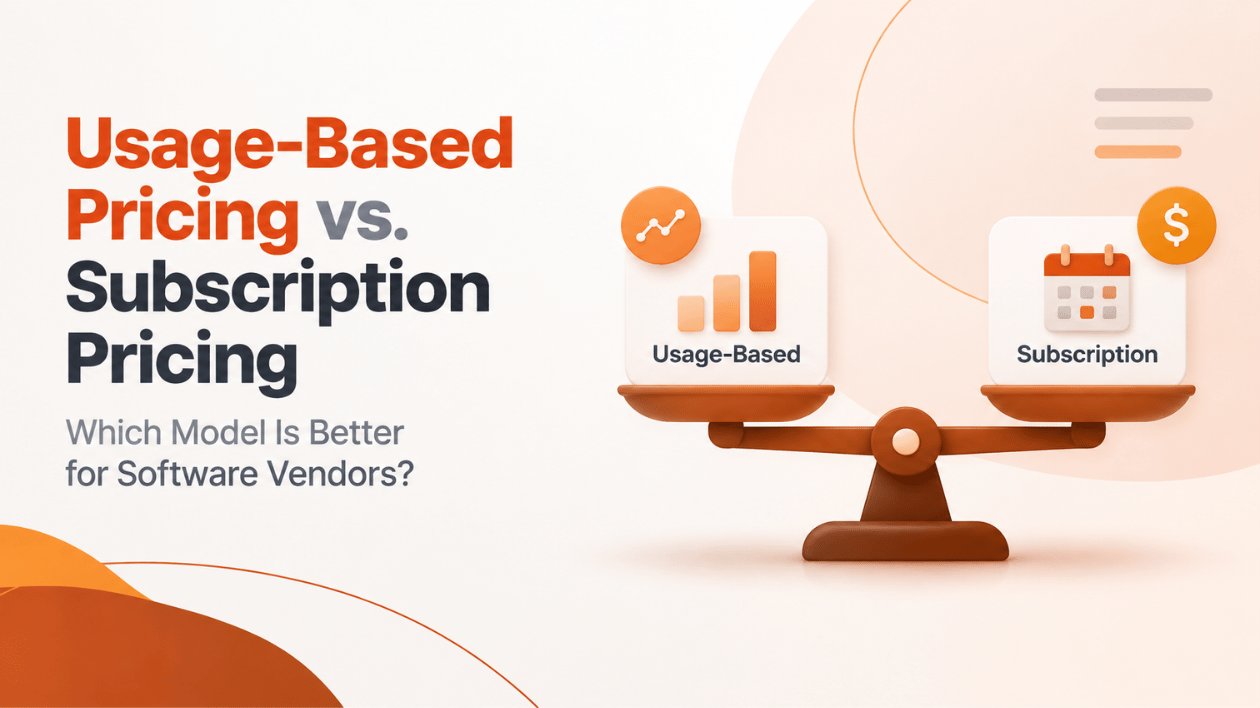
Usage-Based Pricing vs. Subscription Pricing: Which Model Is Better for Software Vendors?
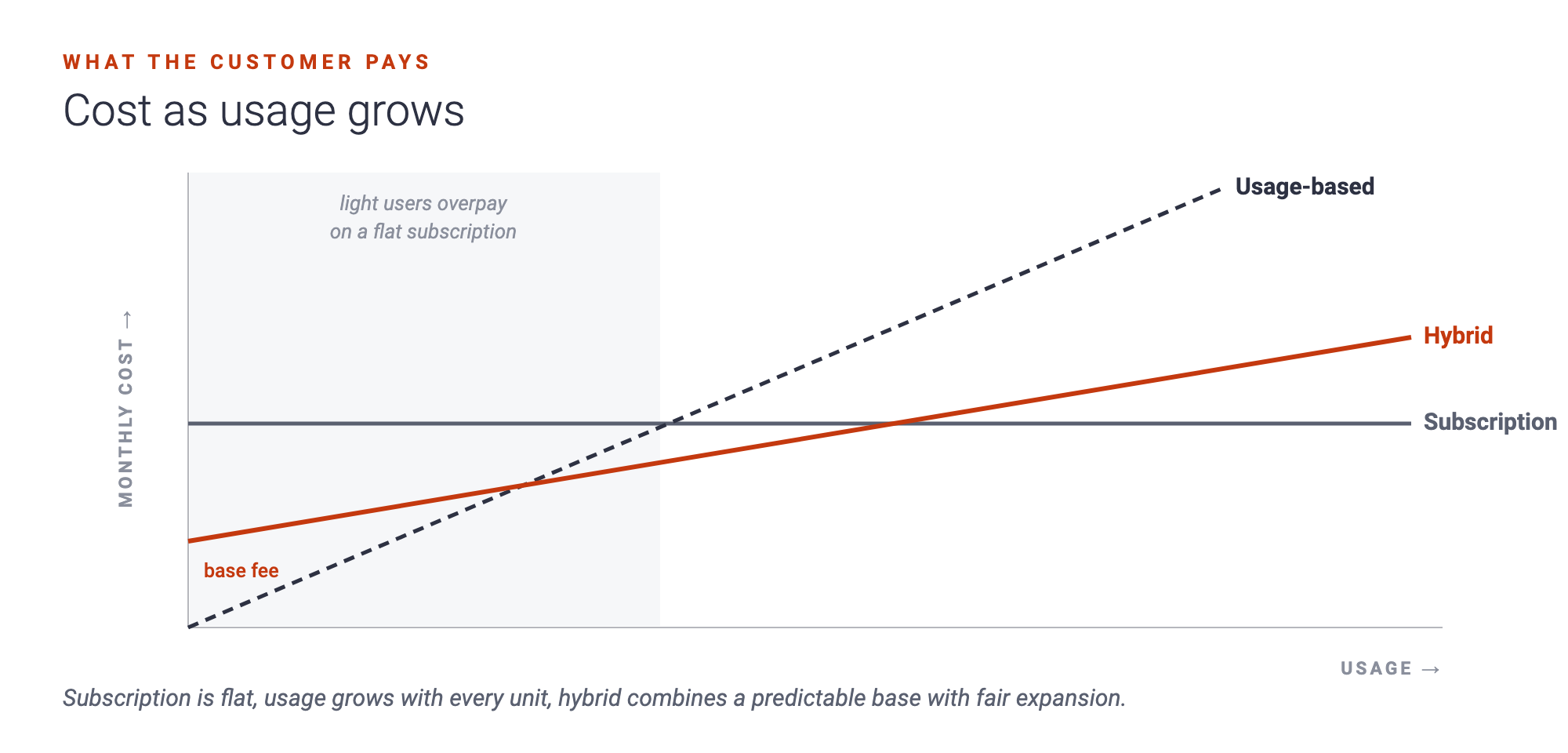
Two customers sign up on the same day. One runs a thousand documents through your service in the first week. The other logs in twice in a month. On a flat subscription, they pay exactly the same.
One of them is getting a bargain and the other is wondering why they pay at all. That’s the tension at the heart of the usage-based vs. subscription debate, and why the honest answer to “which is better?” is usually “it depends on how your customers get value”. Below is how to work out which one fits, and why many vendors end up with both.
Key takeaways
- Subscriptions charge for time and give you predictable recurring revenue. Usage-based pricing charges for consumption and grows with each customer’s volume.
- Usage-based pricing works best when value scales with a measurable unit: API calls, documents, transactions, compute.
- Prepaid credits reduce the main fear of usage-based pricing: the surprise bill.
- The hybrid model, a subscription for access plus usage on top, is often the most balanced option.
The core difference
| Subscription | Usage-based | |
|---|---|---|
| Customer pays for | Time (month, year) | Consumption (calls, documents, minutes) |
| Revenue | Predictable, recurring | Variable, grows with customer volume |
| Customer’s cost | Known in advance | Depends on use, unless prepaid |
| Entry barrier | Fixed price to start | Can start very small |
| Expansion | Upgrades, more seats | Automatic as usage grows |
| Risk for you | Heavy users cost more than they pay | Revenue dips when customers use less |
| Risk for the customer | Paying for unused time | Bill shock |
Neither column is “better”. A subscription suits products people use steadily, such as an editor, a CRM or a design tool. Usage-based pricing suits products whose value comes in units, such as an OCR API, a payment gateway or an AI feature that consumes tokens.
Choosing a usage metric
The hardest part of usage-based pricing isn’t the billing. It’s picking what to count. A good metric is:
- Tied to value: the customer recognises it as something they got, not a technical detail.
- Easy to understand: “per processed invoice” beats “per 100 ms of CPU”.
- Predictable for the customer: they can estimate next month’s number.
- Measurable by you: reliably, without arguments.
The hardest part of usage-based pricing is not the billing. It is picking what to count.
Common metrics: API calls, transactions, processed documents, generated reports, compute or processing time, data volume, and, for AI products, tokens or requests. We looked at the AI case in From Seats to Tokens.
Quotas, metering and overages
Three mechanisms often get mixed up:
- Metering counts consumption and draws it down from a balance. Every call uses something.
- Quotas set a fixed capacity, such as 10 users, 5 projects or 100 GB. Nothing gets used up; you simply can’t exceed it.
- Overages decide what happens past the limit: block, allow and bill later, or prompt for a top-up.
In NetLicensing these are separate models. Pay-per-Use handles metering: customers buy credit packs, your application reports usage when it validates, and NetLicensing returns the remaining balance. Quota handles capacity: the license holds a limit and your application compares its own count against it.
Prepaid credits vs. pay-later
Usage-based pricing comes in two flavours, and the difference matters for both cash flow and trust.
Prepaid (credits). The customer buys a pack, say 1,000 credits, and uses it up. They always know their maximum spend, you get paid up front, and nobody receives a surprise invoice. In NetLicensing’s pre-payment mode, the application reserves credits before using them (reserveQuantity), so a customer can never use more than they paid for.
Pay-later (post-payment). Usage is recorded as it happens and settled afterwards. It’s friendlier for heavy, unpredictable users, but you carry the risk. In NetLicensing’s post-payment mode, the application reports what it used since the last check (usedQuantity), and the balance can go negative.
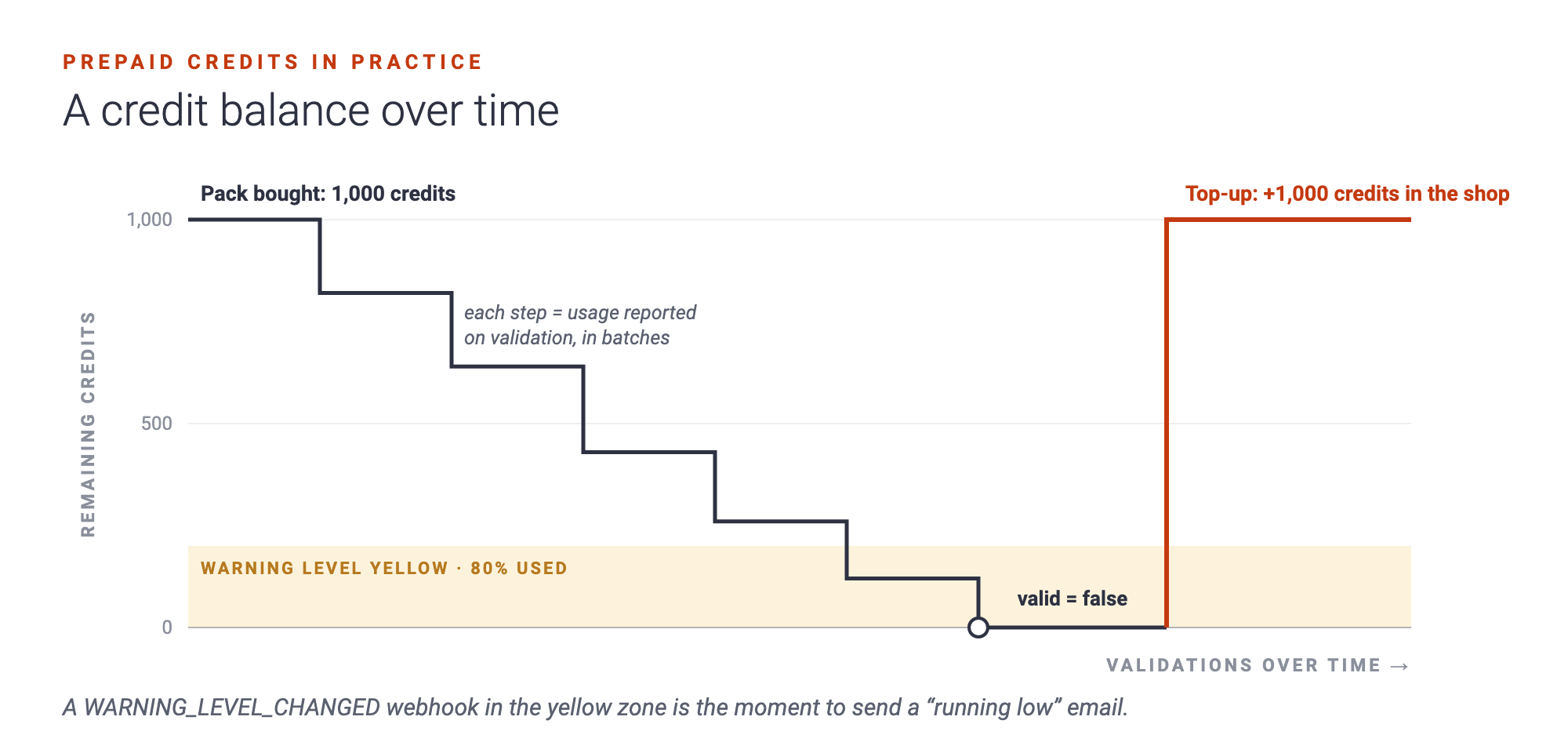
Either way, when the balance hits zero, validation returns valid=false and the customer can top up in the shop. Warning levels and webhooks let you send a “you’re running low” email before that happens, which customers appreciate far more than an interruption.
A practical tip: report usage in batches (per job, or once per validation interval) rather than for every single unit, and keep unreported usage on your side until the call succeeds, so nothing gets lost in a network hiccup.
Minimum commitments
Pure usage-based pricing can leave you with revenue that swings month to month. Two common fixes:
- A minimum commitment: the customer commits to a base amount, with usage on top.
- A platform fee: a subscription for access, with consumption billed separately.
Both bring back some of the predictability of a subscription without giving up the upside of usage.
The hybrid model: subscription + pay-per-use
For many products, the best answer is both. A subscription covers access, support and a baseline. Usage covers the variable part.
Typical setups:
- Platform fee plus credits: a monthly fee for access, credit packs for API calls.
- Plans with included limits: each plan includes a monthly volume, with more available on demand.
- Seats plus storage: concurrent or named seats for people, a quota for data.
In NetLicensing, a hybrid model is just two product modules on the same product, for example a Subscription module for access and a Pay-per-Use module for consumption. One validation call returns both: whether the subscription is active and how many credits are left. The usage-based licensing guide walks through the details.
So which is better?
Use this as a quick check:
- Customers use the product steadily, and value comes from access → subscription.
- Value comes in countable units, and usage varies a lot between customers → usage-based.
- You need predictable revenue but your heaviest users are worth far more than your lightest → hybrid.
- Customers are afraid of variable bills → usage-based with prepaid credits, or a hybrid with included volume.
Questions people ask
Can subscription and usage-based licensing be combined? Yes, and it’s common. Use a subscription for access and metered credits for consumption. Customers get a predictable base, you get expansion revenue.
How do I stop customers from exceeding what they paid for? Use prepaid credits with reservation: the application reserves credits before using them, and reservations beyond the remaining balance are refused.
What’s the difference between a quota and pay-per-use? A quota is a fixed capacity that doesn’t get used up, such as 10 users. Pay-per-use is a balance that shrinks with every unit consumed.
Is usage-based pricing harder to implement? The metering itself isn’t hard if your licensing system tracks balances for you. The real work is choosing a metric customers understand.
Try both before you decide
Pricing isn’t a one-time decision. Start with what fits today and keep the option to add usage, or a subscription, later. Pay-per-Use and Quota are part of the NetLicensing Select plan, and Subscription is available on every plan, including the free one. Compare the details on our pricing page or tell us about your product and we’ll help you model it.
Happy Licensing!
Image Credits: NetLicensing
Related Posts
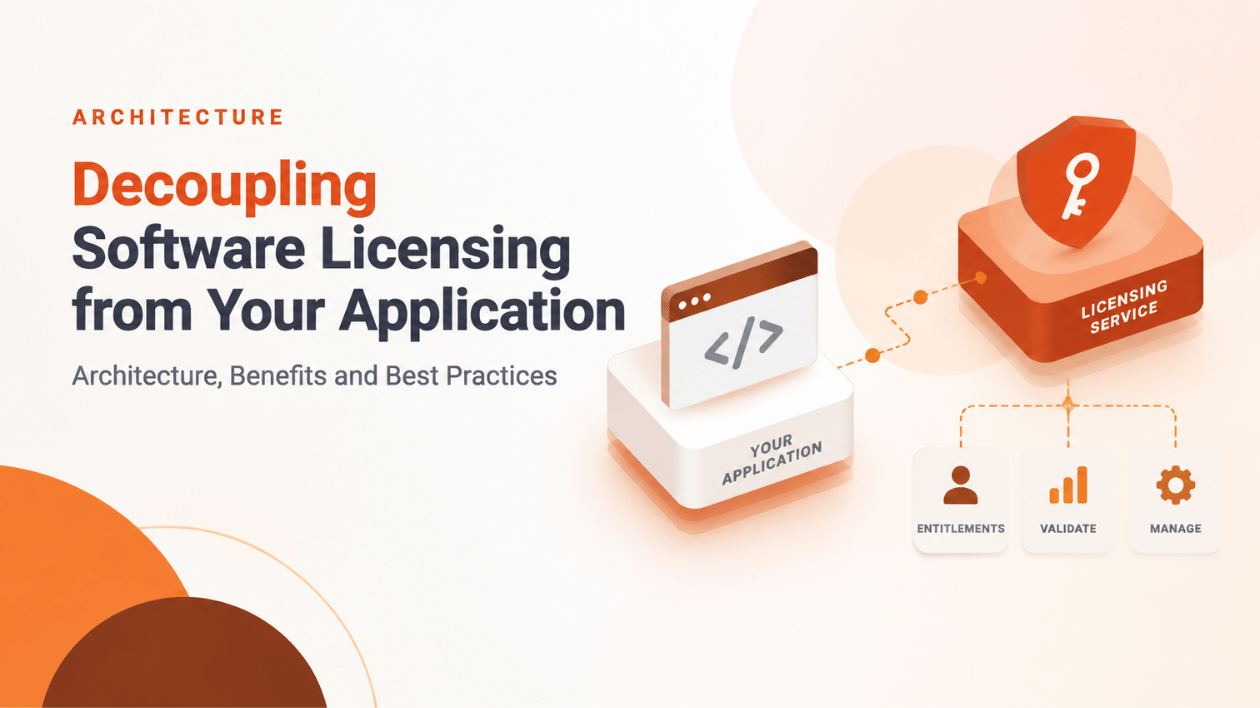
Decoupling Software Licensing from Your Application: Architecture, Benefits and Best Practices